Subscribe to Featured

Safety Net

An innovative way to aid the uninsured while reducing ER costs (video)

Betting on Reno(Editor’s Note: This is the second of a series of articles on the Athens uninsured initiative, produced by graduate students in the Health and Medical Journalism Program at the University of Georgia. Visit the previous article by clicking on the red button to the left.)

YouTube Preview Image

In Athens, a city where 35 percent of residents live in poverty, many people can neither afford health insurance premiums nor pay out of pocket for services.

As a result, hospital emergency rooms may be the only option that uninsured people see for themselves – even though they may have chronic diseases and not the sudden illnesses or injuries that emergency rooms are meant to handle.

Such misuse of emergency rooms is expensive for hospitals and bad for the nation’s soaring health care costs.

A local coalition of health care providers called the Athens Health Network is seeking relief by looking far beyond Georgia. It’s following the example of Reno, Nev.

Reno is very different from any Georgia city. Lying in the high desert at the foot of the Sierra Nevada, it has long been a center of gambling and tourism. Today, the city is becoming known for an innovative health program.

The Reno program, called Access to Healthcare Network, links hospitals, doctors and patients in what the founders call “shared responsibility.” Hospitals and doctors provide services at a reduced fee. Though the fee is relatively low, patients are required to pay it up front, eliminating delays and extra paperwork for caregivers.

“The hospital’s role in the shared responsibility model is that they offer our discounted rate to our members,” said Niki King of Access to Healthcare Network. “The return is that we put our members into a primary care home and get them out of the emergency room.”

For network members, in-patient hospital care at a participating hospital costs $400 a day, all-inclusive, with a $3,000 cap for each stay. According to King, the $3,000 limit protects members against medical bankruptcy.

Outpatient visits and surgical procedures are also discounted, which motivates members to get care from doctors and hospitals instead of the emergency department.

An uninsured woman who comes into an emergency room with pelvic pain may ultimately need a hysterectomy. That’s major surgery. King notes that while ERs are legally required to stabilize all patients, regardless of ability to pay, they don’t have to provide full-scale medical treatment. “They can give you pain pills and send you on your way,” she said.

With the outpatient discounts provided through Access to Healthcare, members can afford the full level of care they need.

A hysterectomy “that might have cost $20,000 to $50,000 [for an uninsured person] . . . is $2,500 to $5,000” for a program member, King said.

Seven years ago, when Access to Healthcare Network began, it contracted with two Reno hospitals willing to treat members at reduced rates: Renown Regional Medical Center and Saint Mary’s Regional Medical Center. The organization now works with seven hospitals across the state.

“Over the past six years, we’ve enrolled 20,000 members statewide, and we have a hospital ER utilization rate of .05 percent,” King said. That means one in every 200 members goes to the ER each year. By contrast, 9 percent to 12 percent of insured Nevadans seek ER care each year.


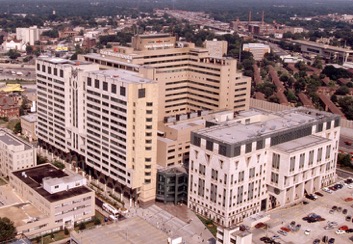
Reno's network for the uninsured contracts with seven hospitals to provide care at discounted rates, including Renown Regional Medical Center (above)

Reno’s network for the uninsured contracts with seven hospitals to provide care at discounted rates, including Renown Regional Medical Center (above)

Patients share responsibility

Partnering with Access to Healthcare Network was a weighty decision for the Nevada hospitals, according to Chris Bosse, vice president of government relations at Renown Health, a nonprofit health system that includes Renown Regional Medical Center.

“Initially when we sat down with Access to Health and looked at contracting, I think the piece we all had to remember was the rates were not going to be rates that covered costs,” Bosse said.

For this reason, Renown views the plan as a part of the hospital’s charity work, but with a twist. Bosse says network members are engaged with their own care in a way that other charity patients are not: They pay fees for every service they receive and are required to show up for appointments.

If a member misses an appointment without canceling 24 hours ahead of time, the member pays a $25 no-show fee. After two no-shows, the member is removed from the program.

“I believe strongly that it’s been a good thing in the Reno area, primarily because doctors have come to the table, hospitals have come to the table, and the patients have come to the table, and we all have to give something,” said Bosse. “[Members] now have access to primary care earlier, and I believe frequently don’t have to go to the emergency room as their primary care home,” she said.

Like Reno hospitals, Athens hospitals treat many patients who don’t have insurance or a regular health care provider. “The emergency departments in Athens are full, at Athens Regional about 75,000 visits a year and growing,” said Grant Tribble, senior vice president of operations at Athens Regional Medical Center.

A medical discount plan would provide approximately 5,000 Athenians with affordable care outside the ER, according to an Athens Health Network board member, Sister Patricia Loome.

This number is similar to the 4,700 members that Access to Healthcare serves from Nevada’s Washoe County, where Reno is located.

ACA may bring changes

Both Athens hospitals have expressed interest in the discount program, which is not an insurance plan.

It’s a way of buying discounted care through a club membership (like buying discounted products through a warehouse club). As the Affordable Care Act, the 2010 federal health care law, moves forward, many Athens-area residents will still be in need of this nonprofit medical discount network, especially if Georgia does not expand its Medicaid program under the act.

The member pool of the Nevada discount plan may change in 2014. That’s when the ACA’s insurance mandate – the requirement that most Americans have health insurance or pay a penalty – takes effect. Since the medical discount plan doesn’t count as health insurance, some patients may actually buy coverage.

The plan also will still serve individuals choosing to pay the penalty, and those who are not required to buy insurance under the ACA, such as those who would have to pay more than 8 percent of their income for an insurance plan.

Athens Health Network hopes to be able to enroll uninsured Athenians in a similar medical discount plan beginning in early 2014.

Reducing inappropriate, expensive ER visits could save Athens hospitals a lot of money. But Loome, who is also vice president for mission services at St. Mary’s Health Care System, said saving money would not be the primary motivation for the hospital to join a discount plan.

“Our first motivation is how can we care for the community,” she said. “And certainly if more people can come for care, to the right level of care, and there’s some payment, then that’s a help to the hospital.”


Julianne Wyrick is a freelance science and health writer currently completing the health and medical journalism graduate program at the University of Georgia.


Nevada medical plan inspires new program in Athens (video)

Betting on Reno
Sara Schopper was doubled over with pain from gallstones when she arrived last May at St. Mary’s Regional Medical Center in Reno, Nev. To make things even worse, she had no health insurance.

Once doctors had removed her gallbladder, Schopper faced thousands of dollars in hospital bills as an uninsured worker. Before she left the hospital, however, she heard about a local reduced-rate insurance program that would keep the bills for this procedure under $2,000, and that she could even join retroactively.

When Schopper signed up for the plan, she did not expect to have to use it very soon. But just three months later, she found out she was pregnant. She then added an additional maternity care package that covers doctor visits, an ultrasound, an epidural and a hospital stay. The total cost was $2,000, which she is paying in installments.

“My baby will be paid for when the due date comes, and that’s a relief,” said Schopper, 33, a single mother who runs a plant nursery and landscape company. “This makes the process easier because paying bills makes pregnancy not as fun.”

The pregnancy package is one feature of Nevada’s Access to Healthcare program, a network of doctors, specialists and hospitals that offer reduced rates to members who don’t already have health care insurance.

On the other side of the country, in Georgia, doctors are mimicking the program to bring better care to patients who do without insurance. Athens health leaders, who have investigated the 7-year-old Reno network, hope to start their own reduced-rate program by the end of the year.

The typical participant in the Nevada program is a working adult who earns too much for Medicaid eligibility. Members pay about $40 monthly for membership in the program, and they then pay set fees for doctor visits, medical procedures and hospital stays. For Schopper, that means $300 for epidural pain relief during her delivery and $400 for each day in the hospital.

“For a single mom who works hard, insurance is so expensive, and this is a nice option. I don’t know what I would have done otherwise with this pregnancy,” she said. “Hardworking people can’t get the best health care coverage with the economy the way it is, especially when they don’t want to turn to welfare or Medicaid.”

YouTube Preview Image

The Reno prototype

Doctors and community members in Reno created the Access to Healthcare Network (AHN) in 2007 to help an increasing number of locals who were not covered through employer-sponsored insurance.

“The network has been more successful than any of us thought it would be,” said Christine Caulfield, director of eligibility and enrollment. “We’ve been able to give structure to a structureless system.”

The goal is to accomplish several things at once: to focus on preventive care; to give individual Reno residents a primary care home [a central practice that handles a patient’s various health needs], to reduce paperwork for insurance claims; and to help doctors collect cash at the time of appointments, Caulfield said.

“It helps to get the ball rolling because people look at cost as a barrier to care.” said Jeff Snyder, administrator of Reno’s OB-GYN Associates. “Though we’ve always extended discounts to those with a financial need, patients didn’t approach us because they perceived a barrier.”

The private practice he manages accepts 10 to 15 Access to Healthcare members at a time who are pregnant or need gynecological care.

“The reimbursement from AHN is less than Medicaid reimbursement, so we must limit the available slots,” Snyder said. “But I think the community as a whole recognizes this problem, and other practices participate as well.”

To be eligible, a Nevada resident must earn between 100 percent and 250 percent of the federal poverty level, which is $11,000 to $27,900 for a single person or $15,000 to $37,800 for two people.

When members sign up for the program, a care coordinator helps them find a primary care provider. If the member needs additional services, the care coordinator arranges appointments with specialists as well.

When it comes to women’s health, OB-GYNs in the network offer reduced fees for annual exams, surgeries, and tests for gonorrhea and chlamydia. State grant programs also provide for breast and cervical screenings.

Dr. Ricardo Garcia, an OB/GYN, delivers care as part of the the Access to Healthcare Network in Reno, Nev.

Dr. Ricardo Garcia, an OB/GYN, delivers care as part of  the Access to Healthcare Network in Reno, Nev.

“The system is ideal because of the focus on providing care for patients who otherwise wouldn’t get it,” said Ricardo Garcia, an OB-GYN at Women’s Health Specialists of Nevada. “And even though the rates aren’t the greatest, this is cash. The federal reimbursements take forever.”

The maternity care plan includes prenatal care, delivery and one postpartum visit for less than $2,500.

Depending on the mother’s income and which hospital she chooses, this includes $1,000 to $1,230 for a regular delivery or $1,650 to $2,400 for a Caesarean section.

As the program enters its seventh year, it is signing up more and more patients from the Las Vegas area and from Nevada’s remote rural counties, where there are few doctors or hospitals. The network received 40 calls inquiring about maternity care in February alone, Caulfield said.

“There aren’t many options in Nevada other than Medicaid or private insurance,” Caulfield said. “Even then, some insurances don’t cover anything related to maternity care, and that becomes very expensive out-of-pocket.”

The Athens program

In Georgia, doctors and community members are creating a similar health care plan for the roughly 5,000 people in Athens who went without insurance in 2010. This is the first time the Nevada approach to a health safety net has been adopted outside the state, though the two programs are not affiliated.

“This is for our small businesses and nonprofits that don’t have a large enough risk pool for insurance, our part-time artistic workers, our students whose parents don’t have insurance, and others,” said Allie Chambers, director of the Athens Health Network, the organization that hopes to start the program.

The Athens Health Assurance Program is not an insurance plan. It’s a way of buying discounted care through a club membership (like buying discounted groceries through a warehouse club). As the Affordable Care Act moves forward, many Athens-area residents will still be in need of this nonprofit medical discount network, especially if Georgia does not expand its Medicaid program.

When Chambers was earning her master’s degree in public health at UGA, she scoured the nation for a “capstone project,’’ a way to make health care affordable for low-wage workers. That’s when she discovered and studied the Reno plan, and AHN’s board members were so enthusiastic about it that they agreed to bring it to Georgia.

Chambers is now the point person for obtaining grant support, gathering donations, and recruiting doctors and hospitals for the provider pool, which they plan to have in place by the end of the year.

Chambers and others are conducting focus groups and a community survey to estimate how many Athens residents will sign up, how much they would be willing to pay for services and which services are needed.

The group will start by enlisting primary care doctors and then go after specialists, including OB-GYNs.

A maternity care package probably won’t be offered at the start.

Three Athens clinics — Mercy Health Center, Athens Nurses Clinic, and Athens Neighborhood Health Center — offer reduced-price Pap smears, pelvic exams, and testing for sexually transmitted diseases if patients fall under 150 percent of the federal poverty guidelines. But these clinics are not equipped to care for pregnant women or deliver babies.

Right now, the only option for uninsured low-income women who need obstetric care is the midwifery clinic at Athens Regional Medical Center, which has been delivering babies for more than two decades.

The hospital primarily serves Athens and the five counties in its immediate area, but the midwifery clinic pulls in patients from the entire northeastern region of the state.

“A maternity package is probably not going to happen when we pilot the program, but I think partnering with Athens Regional and being able to use their midwifery clinic will be a huge help,” said Tracy Thompson, executive director of Mercy Health Center and chairwoman of the Athens Health Network executive committee. “Obstetric care is very lacking in this area, especially for the working poor, who must pay everything up front.”

Carolyn Crist is pursuing her master’s degree in Health and Medical Journalism from the University of Georgia. She graduated from UGA in 2010 with degrees in newspapers and English and worked at The Times in Gainesville  as an education and political reporter.


The surprising things going on in community health centers

MedLink, one of the state’s largest FQHCs, has 10 locations in northeast Georgia, including this facility in Colbert

MedLink, one of the state’s largest FQHCs, has 10 locations in northeast Georgia, including this facility in Colbert

Federally funded community health centers provide free or low-cost care to people who might otherwise go without.

According to the most recent estimates, more than 300,000 patients received care from Georgia’s 27 federally qualified health centers, or FQHCs, in 2010.

These centers have a reputation for being no-frills places with few amenities.

That reputation may be due for an update. Though FQHCs would hardly be thought of as fancy, in some cases they offer conveniences that private practices do not.

MedLink, one of the state’s largest FQHCs, with 10 locations in northeast Georgia, has after-hours clinics for people who can’t miss work to see the doctor.

The health centers in rural regions often use telemedicine to diagnose some ailments, giving the patients access to specialists who can only be found in metropolitan areas. Some clinics use Skype or telephones to provide psychiatric services for people living in rural areas as well.

The people they serve are grateful. A nationwide study of low-income patients showed that those cared for in FQHCs are much more satisfied with their care than people who see doctors in other settings.

This is one of several important findings from the newest in a series of studies carried out by Dr. Leiyu Shi, director of the Johns Hopkins Primary Care Policy Center. He is an expert on the role the centers play in broadening access to health care and improving health outcomes throughout the population.

A model for other facilities?

Whatever it is that’s increasing patient satisfaction at these clinics may offer a lesson for providers in other settings, which will be increasingly important as the Affordable Care Act takes full effect in 2014.

The advent of the ACA and the continued alarm about the soaring costs of health care are shifting the focus from the quantity of care to its quality. For example, some provisions of the law will reward health care providers for providing better care, not for providing more services.

Another section of the law is spawning Accountable Care Organizations, designed to coordinate care and keep patients at home and not in the hospital, which is also expected to help lower costs.

“If the health center model is used as a mainstream provider, health care spending should decline,” Dr. Shi said. The study also shows that the centers’ quality of care is good – bolstering claims made by clinic administrators.

“Our goal is to provide primary health care to anybody that needs a medical home,” said Angela Rouse, director of business and community outreach for MedLink. According to Rouse, anybody includes people with no insurance, the best insurance, and everyone in between. Rouse works in MedLink’s Colbert office.

MedLink emphasizes long-term solutions over short-term fixes, said Rouse, emphasizing risk reduction and setting price expectations up front rather than waiting until a heart attack or other crisis happens.

The high level of satisfaction expressed by community health center patients surprised Shi and his team of Hopkins researchers. These clinics are not lavish by ordinary standards, and they are often found in areas where patients must overcome difficult personal circumstances, such as lack of transportation, to obtain health care.

Typically these clinics are in inner cities or extremely rural areas, where access to medical care has often been limited and sometimes non-existent.

A few years ago, MedLink conducted a patient satisfaction survey and recorded exceptionally high satisfaction scores despite long waiting times. Follow-up interviews revealed that patients were happy with the centers because of relatively modest things, such as a waiting room with air conditioning and television and a friendly staff.

“Their perception is we were meeting a need,” said Rouse. One-third of the patients at MedLink are uninsured, and air conditioning and TV are luxuries for some. Knowing this makes Rouse hesitant to put too much trust in patient satisfaction surveys.

Although Dr. Shi’s study shows high rates of patient satisfaction among community health centers, an evaluation of the care provided by Georgia’s FQHCs last year was not as favorable.

Georgia ranked near the bottom on four quality measures of care, including percentage of children who receive all seven federally recommended vaccines by age 2; percentage of adults — ages 18 to 85 — with hypertension who have their blood pressure under control; percentage of low-birthweight babies; and percentage of women — ages 24 to 64 — with at least one Pap test in the past three years.

Striving for improvement

After an article on the health centers in Kaiser Health News last April, Duane Kavka, executive director of the Georgia Association of Primary Health Care, told GHN that the 27 community health center organizations in the state are working to become ‘‘patient-centered medical homes.’’

“We’ve got to do better,’’ he acknowledged. Kavka also noted that the patients who get services at the clinic are ‘‘a population that no one wants to see.’’

Dr. Shi’s studies are ongoing, and he intends to dig deeper into patient satisfaction, so he can tell the difference between a fondness for air conditioning and actual quality-of-care measures.

He believes strongly in integrating preventive care and other services into people’s daily lives and community experience.

Rouse agrees, saying that every successful health center she can think of is actively involved with its community.

In the spacious waiting room of the MedLink Clinic in Colbert, an educational program about diabetes, a problem shared by many of the clinic’s patients, plays on a large TV screen.

Med Link’s communication strategy is simple and familiar: Knowledge is power.

“We’re the Home Depot, we’re the Lowe’s. We give you the tools, and what you build with those tools is up to you,” Rouse said.


Ian Branam is a freelance health and science writer currently pursuing a master’s in health and medical journalism at the University of Georgia. Ian has bachelor’s degrees in history and psychology from the University of Georgia. He is particularly interested in writing about public health, epidemiology, and the environment. Follow on Twitter as @ianbran6

Georgia’s rural hospitals feeling the rough times

This story is also appearing in GHN’s partner Kaiser Health News


Stewart Webster Hospital

Stewart-Webster Hospital last week suspended operations

In the small Georgia town of Demorest, Habersham Medical Center, like many rural hospitals, has seen its patient base change in a way that hurts its bottom line.

As unemployment in the northeast Georgia mountains remains stubbornly high, more of the hospital’s patients have no health insurance.

Among those patients with private coverage, an increasing number have high-deductible policies, which means that patients must pay all or a large portion of the bills out of pocket. And a large share of patients have Medicaid, the federal-state program for low-income people that often doesn’t reimburse enough to cover the cost of services, hospital officials say.

The hospital has enough cash to meet its payroll and service its debt, but that’s about it, says Jack Fulbright, the acting CEO.

Still, Fulbright and hospital authority board member Rick Austin assert that Habersham Medical will survive these tough times. “Habersham Countians are resilient,” Austin says. “We’re tough as a boot up here. We’re not going anywhere.”

Its financial squeeze reflects trends facing rural health care providers, both in Georgia and nationally.

Financial problems recently led Calhoun Memorial Hospital in Arlington in southwest Georgia to close its doors. Earl Whiteley, the hospital’s CEO, cited as a major reason the increase in charity care that the 25-bed facility incurred. “You just can’t continue to give away free care,” Whiteley said in a recent interview.

Stewart-Webster Hospital, 50 miles north of Calhoun Memorial, announced that it, too, was halting operations effective last Friday.

The closure of a hospital can have broad repercussions for a rural area, including:

* Deteriorating health care. People in rural areas tend to have poorer health than elsewhere. Patients’ health outcomes in Stewart County, where Stewart-Webster Hospital is located, were ranked next to last among Georgia counties, according to new 2013 county health rankings produced by the University of Wisconsin and the Robert Wood Johnson Foundation. The bottom 10 Georgia counties in the rankings are mainly rural.

* Recruiting doctors to the community. “Rural hospitals are struggling to produce an economic quality of life for young physicians,” says Jimmy Lewis, CEO of  HomeTown Health, an organization of rural hospitals in Georgia.

* Maintaining economic stability. The availability of health care is vital for a rural area’s economy. A hospital itself is often the top or No. 2 employer in a rural county. Habersham Medical, for example, employs more than 500 people, and the closing of Calhoun Memorial will result in a loss of 100 jobs. Stewart-Webster Hospital is the largest employer in the town of Richland. In addition, a rural area’s ability to attract businesses is partly tied to the availability of a hospital and other health care services.

* Losing important services. In a sign of the overall predicament of rural hospitals in Georgia, at least 40 of them have given up delivering babies. The hospitals blame high costs and low reimbursements. Another big factor is the shortage of rural obstetricians.

A thin margin

Rural hospitals generally operate on a very thin margin, even in the best of times.

Brock Slabach of the National Rural Health Association says the latest figures available show rural hospitals nationally have a negative profit margin of 5.68 percent.

That negative trend will be aggravated by sequestration, the automatic federal spending cuts that went into effect this month. It will reduce Medicare payments by 2 percent and could result in the loss of 12,000 rural hospital jobs, from nurses to support staff, according to Slabach.

Rural health care is accustomed to tough times, but this period appears especially tough, he says.

The Georgia legislature moved quickly this year to help rural hospitals, passing a bill that will speed renewal of a fee hospitals pay allowing the state to draw down an extra $400 million in federal Medicaid funding.

But Georgia hospitals will also lose $400 million in federal indigent care funds under the Affordable Care Act, which has many hospital industry officials concerned. The law cut back payments, called Disproportionate Share Hospital funding or DSH, that had helped cover care for uninsured patients.

The law assumes that most of these uninsured patients would get coverage through an expansion of the Medicaid program. The U.S. Supreme Court ruled last year, however, that states don’t have to expand Medicaid to cover such people, and Republican Gov. Nathan Deal says Georgia won’t do it because it’s too costly.

Medicaid expansion is necessary to add more paying customers for hospitals, Lewis says. “We don’t have a choice’” in order to save rural providers.

Fulbright of Habersham Medical Center says Medicaid expansion “would certainly help us.” Meanwhile, the hospital is seeking a partnership or affiliation with a bigger hospital, perhaps Northeast Georgia Medical Center in Gainesville.

“We’re looking at everything we’re doing [to find] the best way forward,” Fulbright says. Recently the hospital sought to be annexed by the city of Demorest, which would lower its utility bills and security costs.

No more deliveries

For many rural hospitals, a key way to cut costs is to eliminate childbirth services.

Last year, Burke Medical Center, south of Augusta, gave up obstetrics, saying it was losing more than $1 million on the services.

Unless a birth is considered so imminent that it’s an emergency — in which case the delivery is performed in Burke’s emergency room — pregnant women must travel 25 miles or so to Augusta to have their babies.

Among Georgia’s “critical access” hospitals — rural facilities with no more than 25 inpatient beds — 32 of 34 have given up maternity services, according to Lewis of HomeTown Health.

One reason is that it’s difficult to maintain a high-cost service with low reimbursement rate.

About 60 percent of births in Georgia every year are covered by Medicaid, and Georgia physicians and hospitals say the government insurance program generally does not pay them enough to make up for the costs of the care. Georgia obstetricians have not had a Medicaid pay increase in more than a decade.

“Payments don’t cover deliveries and follow-up care,” says Lewis. And if there’s only one OB in an area, that doctor is always “on call,” he adds.

Pat Cota, executive director of the Georgia OBGyn Society, says roughly 40 counties in Georgia — one in every four — has no OB/GYN. “Between Athens and Augusta, there’s no delivery hospital.” Cota says. “It continues to get worse and worse.”

Pregnant women in Burke County get prenatal care through family medicine physicians and nurse practitioners in the area.

Infant mortality is improving in the state, though Georgia still ranks among the bottom 10 states on that measure, says Dr. Paul Browne, director of maternal-fetal medicine at Georgia Regents University in Augusta, which is helping Burke County with its prenatal care. He adds that the maternal death rate in the state is actually getting worse.

Increased reimbursement for physicians is a critical need, Browne says. But he acknowledges that it’s hard to persuade budget makers to include such funds given the state’s financial crunch.

The big question, he says, is: “Will the state subsidize rural health care in Georgia?”


Born far from home: Fewer rural hospitals delivering babies

Women in some rural counties are having to drive long distances to deliver their babies.

Women in some rural counties are having to drive long distances to deliver their babies.

Last year, Burke Medical Center faced some tough math in trying to keep its childbirth services going.

The 40-bed hospital in Waynesboro, in rural east Georgia, was losing more than $1 million per year on its obstetrical services.

Given the high overhead, a hospital must deliver 500 babies or more a year to break even on that service, says Stephen Shepherd, CEO of Burke Medical Center. “In rural areas, getting up to 500 babies is tough.’’

And last summer, the hospital’s lone pediatrician retired from the medical staff.

Burke Medical sought to replace him, and while it was doing so, its sole OB/GYN left to practice in Augusta.

So in December, with no OB on board, Burke Medical Center closed its obstetrics program. Unless a birth is considered so imminent that it’s an emergency — in which case the delivery is performed in Burke’s ER — pregnant women must travel 25 miles or so to Augusta to have their babies.

The hospital’s decision to close its labor and delivery service continues a trend in Georgia and elsewhere.

Many rural hospitals in the state have given up on offering obstetric services over the past decade. One reason is that it’s difficult to maintain a high-cost service with low reimbursement rates; another is that many rural hospitals struggle to recruit physicians to run such a program.

Among Georgia’s “critical access” hospitals –- rural facilities with no more than 25 inpatient beds –- 32 of 34 have given up maternity services, according to Jimmy Lewis of HomeTown Health, a rural hospital organization.

About 60 percent of births in Georgia every year are covered by Medicaid, and Georgia physicians and hospitals say the government insurance program generally does not pay them enough to make up for the costs of the care. Georgia OB/GYNs have not had a Medicaid pay increase in more than a decade.

“Payments don’t cover deliveries and follow-up care,’’ says Lewis. And if there’s only one OB in an area, that doctor is always “on call,’’ he adds.

A shortage that just keeps growing

Pat Cota, executive director of the Georgia OBGyn Society, says roughly 40 counties in Georgia –- one in every four –- has no OB/GYN. “Between Athens and Augusta, there’s no delivery hospital.’’ Cota says. “It continues to get worse and worse.”

There are only five obstetrics residency program in the state -– two in Atlanta and one each in Augusta, Macon and Savannah.

“We’ve got to look at some kind of model to provide access to OB for women in rural areas,’’ Cota says. “It involves adequate payment.’’

Obstetricians will not be getting a Medicaid pay raise this year from the federal Affordable Care Act, unlike pediatricians, internists and family practice doctors. In fact, OB/GYNs could take a slight pay cut under Gov. Nathan Deal’s proposed budget.

Cota also says recent legislation in Georgia is a deterrent for some OB/GYNs to practice in the state. Last year, the Georgia General Assembly passed a bill that generally bans abortion after 20 weeks of pregnancy, reducing by about six weeks the length of time during which women in Georgia may have elective abortion. Critics of the law say it puts doctors at risk who work with difficult pregnancies.

Burke Medical Center, the sole hospital in Burke County, has been losing money for several years. The remaining doctors, though, are providing good care in the area, Shepherd says. “There is still excellent care available in Burke County,’’ he says.

Women in the county — many of them teenagers — get prenatal care through family medicine physicians and nurse practitioners in the area. Shepherd says, “If the mother is in active labor, we do [the delivery] in the ER.’’ The hospital has retained its OB nurses, he adds.


A  lot of time in the car


The drive from Waynesboro to an Augusta hospital takes about 45 minutes, says Dr. Paul Browne, director of maternal-fetal medicine at Georgia Regents University in Augusta, which is helping Burke County with its prenatal care.

A long car ride to the delivery room can raise the chance of a bad health outcome for the baby or the mother, Browne adds.

Infant mortality is improving in the state, though Georgia still ranks in the bottom 10 states on that measure, Browne says. But he also says the maternal death rate in the state is getting worse.

One positive development, Browne notes, is that the Ronald McDonald House in Augusta, run by an international charity that helps ailing children and their families, has provided lodging to at-risk expectant mothers. That allows them to stay close to a hospital before delivering.

In rural areas, helicopter and ambulance transfers to a large hospital are available when there are serious medical complications for mothers and infants.

Increased reimbursement for this emergency transportation, as well as for physicians, is a critical need, Browne says. But he acknowledges that it’s hard to persuade budget makers to include such funds given the state’s financial crunch.

The big question, he says, is: “Will the state subsidize rural health care in Georgia?”


  • Sign up for our mailing list.