The bill is more than 800 pages long. It was introduced just days before the early March “Crossover Day,” when a bill must have passed one legislative chamber to have a shot at ultimate approval.
But those impediments did not diminish interest in Secretary of State Brian Kemp’s proposal to restructure the state boards that license tens of thousands of Georgia professionals, including those in several health care professions.
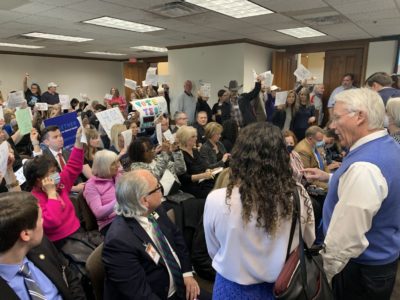
Senate Bill 445 drew a packed hearing room at the state Capitol on Tuesday, as the Senate Regulated Industries and Utilities Committee met to consider the licensing legislation.
The debate appeared to center on a fundamental question: Should professionals such as nurses be disciplined and overseen by a board of their peers, or by an independent, seven-member consumer board, as Kemp is proposing?
Kemp explained the legislation as an attempt to redirect the resources in his office — which has taken a 17 percent funding cut over the past four years — and streamline procedures of 43 professional licensing boards. The bill is so long because of heavy cross-referencing to various other laws, he explained.
The bill would create a new position, director of professional licensing, and establish the seven-member consumer board that would decide disciplinary action for all the professions. The current professional boards would still exist but would focus on policy.
A restructuring, Kemp said, would reduce wait times for routine licensing and make the process more efficient. Last year, he said, his office fielded 58,000 calls from applicants asking about the status of their licenses.
Despite Kemp’s strong pitch, his proposal drew unanimous opposition from representatives of health care associations and licensing boards who testified at Tuesday’s hearing. Most stressed patient safety in their arguments against changing the system.
The Georgia Nurses Association said the Board of Nursing’s efficiency has shown significant improvement recently. “We’re not clear that the total restructuring of the board is needed,’’ said Debbie Hatmaker of GNA.
The nurses’ organization says license revocation, discipline and complaints are best regulated by those who are professionally educated to interpret the complexities of health care. full story