Subscribe to Featured

Disabilities

‘Whole person’ treatment: New approach combines physical, mental care

Whole Person Treatment

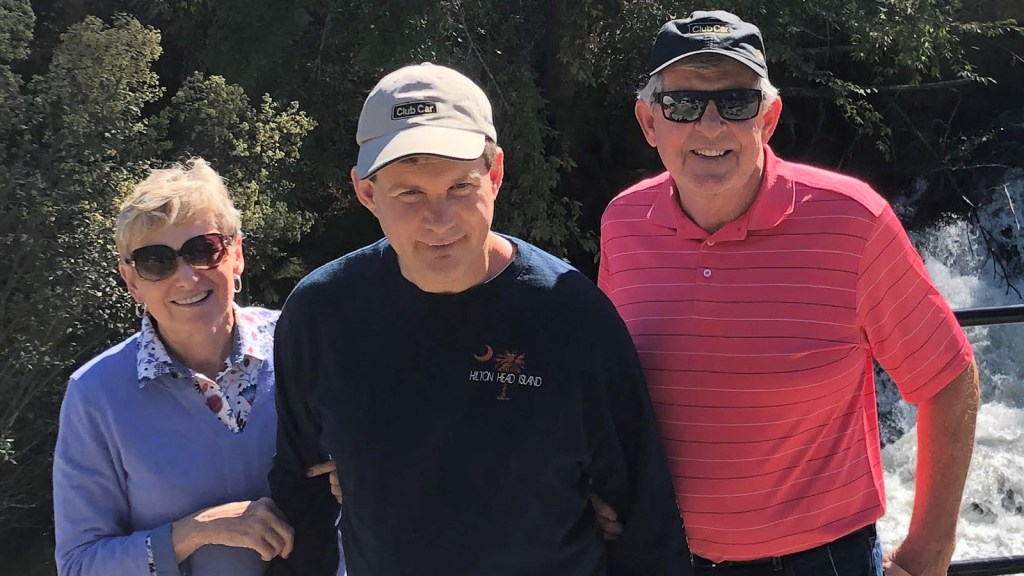
Sharon Hix, along with Stephen Schweitzer (left) and John King, attend a Dalton mental health program. Consumers soon will get medical care, too, in the same building.

Sharon Hix and Brenda Jeffers regularly come to a Dalton day program for people with mental illness.

Each has medical problems in addition to mental health issues. Hix, 65, is pre-diabetic, has high cholesterol and a thyroid problem. Jeffers, 52, is battling a cholesterol problem and attempting to beat her smoking habit. Both women are trying to exercise more and eat healthier.

Their mental health services are delivered in a building that will soon offer medical care as well. Hix and Jeffers, and others like them, will be able to get both kinds of care under one roof. Ideally, that will mean overall care that is better coordinated.

Their Dalton mental health service organization, and a local community health center, are among 93 programs nationally that have won a federal grant intended to improve the “whole health’’ of a person with behavioral health problems.

The trend to merge care for the brain and for the rest of the body has taken off in Georgia, thanks to collaborations between two segments of the safety net: community service boards and community health centers.

Under this integrated model, people with mental illness, who often let their physical ailments go untended, get immediate access to primary care. And many patients who enter the system with medical complaints are diagnosed and treated for depression and other behavioral health problems.

Some behavioral health patients have not seen a primary care doctor in 10 years, says Frank Berry, commissioner of the Georgia Department of Behavioral Health and Developmental Disabilities.

Before being chosen as commissioner, Berry ran a community service board in suburban Atlanta, which created sites in Lawrenceville and Conyers that combined mental and physical health care.

This type of mental/physical health collaboration “is going to provide better outcomes,’’ Berry says. And it will reduce costs by addressing a patient’s needs earlier.

This integration of services seeks to address a longstanding problem: Individuals with severe and persistent mental illness die 25 years earlier than the general population.

These deaths are often the result of largely preventable physical problems — such as tobacco addiction and related illnesses, as well as obesity and diabetes. People with serious mental illness often “don’t exercise, have very unhealthy lifestyles,’’ says Dr. John Bartlett of the Carter Center’s Mental Health Program.

Psychotropic drugs often lead to weight gain, experts say.

Highland Rivers Health, the public behavioral health provider in Dalton, and the local federally qualified health center, Georgia Mountains Health, were recently awarded a four-year, $1.6 million federal grant to improve the care of adults with mental illness who also have diabetes, cardiovascular disease or hypertension.

The money from the Substance Abuse and Mental Health Services Administration (SAMHSA) will help “bring together the mind and the body,’’ says Jason Bearden, CEO of Highland Rivers. The grant will also allow mobile care in vans that will reach nearby rural areas Murray, Gilmer and Fannin counties.

Bearden says of those with serious mental illness at Highland Rivers, up to 90 percent have significant physical issues as well, including high rates of obesity, diabetes, and smoking.

Poverty is a problem for large numbers of people with mental illness. Many don’t get medical help, says Natalie Davis of Dalton, who has fought major depression and now works as a certified peer specialist, trained to assist people with mental illness in their recovery. Many people with mental illness “can’t afford the healthy foods,’’ she adds.

Hope in a hard-hit area

Integration of care will start in early 2013 in Dalton, the northwest Georgia city that’s called the “Carpet Capital of the World’’ but has fallen on hard times since the economic downturn began.

The housing and building slump cut carpet sales drastically, and Dalton suffered the third-worst employment drop of America’s 372 metro areas in 2011, according to government figures.

Dalton’s unemployment rate in October of this year was 11.2 percent, much higher than the state average.

The area has a large homeless population, says Steven Miracle, executive director of Georgia Mountains Health.

People here with mental illness tend to cycle in and out of emergency rooms, jails and homeless shelters. Prescription drug abuse and methamphetamine use are major problems, Miracle says.

The new Dalton program will be a one-stop shop. A primary care physician will be posted at a Highland Rivers behavioral health location. The community health center will do preliminary mental health screenings of its medical patients. Children and teenagers with mental health issues will eventually come to the same center that houses the health clinic.

This integration of care is part of the movement toward what are known as patient-centered medical homes.

A medical home is a single practice or facility that provides as much of a patient’s overall care as possible. “We’re trying to take care of every issue they have,’’ says Duane Kavka, executive director of the Georgia Association for Primary Health Care, which represents community health centers.

Georgia, he says, “is a little ahead of the curve’’ nationally in the move toward integrated care.

The effort in Georgia got a jump start through the Carter Center’s Mental Health Program, which brought together community service boards and health centers from the same geographic areas in a series of meetings beginning two years ago.

The goal was to help facilitate new relationships between safety net providers of physical health and behavioral health, says Bartlett of the Carter Center, who hosted the meetings. He says there are now 20 such partnerships across the state.

The coordination can improve care no matter where the patient enters the system, either from the physical or mental health side, Bartlett says.

He also points out that many people visiting a doctor for physical health needs often have their behavioral health needs unrecognized in the rush of a 15-minute medical appointment. “It’s not a setting that’s designed to address behavioral health.’’ Bartlett says.

And he adds, ”people who are depressed and/or have problem drinking or drugging have worse clinical and financial outcomes for their medical conditions.’’

Integration aims to reinvent primary care to address the whole person through a team approach, he says.

Trend felt in several parts of state

In coastal Georgia, where the Gateway community service board partnered with a health center, behavioral services and medical care are delivered together at three Savannah sites.

“What we’re trying to do is provide treatment for the whole person,’’ says Frank Bonati, CEO of Gateway. State funding has helped in this effort, Bonati adds.

Berry, the commissioner of Behavioral Health and Developmental Disabilities, told GHN that he is working with his counterpart at Community Health, David Cook, on getting technical assistance on these integration efforts from the National Council for Behavioral Health.

Dalton is the third area in the state to get a SAMHSA grant, after Columbus and Cobb/Douglas.

The Cobb and Douglas community services boards, through a four-year, $2 million grant with West End Medical Centers, has installed nurse practitioners and nurses in an outpatient mental health centers in Austell. Patients have access to fitness experts and peer specialists as well.

The collaborative has seen more than 600 patients, and has more than 430 active clients. Peer specialists encourage people with mental illness to get medical care and adopt wellness practices, such as exercise and weight loss.

The Cobb/Douglas and West End program is helping Felton Keyes, 54, who has fought mental illness and substance abuse. He lives at a Marietta residential program run by the community board, and during the day goes to the organization’s Austell clinic for group therapy and other services. He receives medical care at the same location, and help for his high blood pressure.

He even gets his exercise there. “I stay on the treadmill,’’ he says.

Keyes is impressed with the concept of the program. It treats the “biological, emotional and psychological,’’  he says.

Tod Citron, CEO of the Cobb/Douglas community services boards, says 78 percent of patients there have no insurance. The Affordable Care Act could help sustain this project financially by insuring more of them, he says.

Bearden of Highland Rivers says the collaboratives ‘‘are going to be a model of the future.’’

“Reimbursement is going to shift,’’ he says. Government programs and insurers “will want to pay for these types of services.’


Breaking ground on mental health: An interview with Dr. Frank Shelp

Two years ago, Georgia reached a landmark agreement with the U.S. Justice Department to revamp its system of care for people with mental illness and developmental disabilities.

The Justice Department involvement followed articles in the AJC that reported more than 100 suspicious deaths of patients occurred in Georgia’s mental hospitals during a five-year period.

Dr. Frank Shelp was a key player in forging that agreement with the feds. And, as the first commissioner of the Department of Behavioral Health and Developmental Disabilities when it was created in 2009, Shelp had the task of carrying out the overhaul.

Before becoming a psychiatrist, Shelp dealt with these issues in his personal life.

His mother battled mental health problems, and he became her caregiver. In addition, a cousin was killed by a drunken driver while walking home from school, and another cousin with developmental disabilities choked to death, Shelp told GHN.

At DBHDD, Shelp has been credited with helping to turn around a failing system. He has also received criticism for some of his actions as commissioner.

The new Georgia system isn’t without problems,  from jails housing many people with mental illness to failures of  community teams formed to help people with mental illness.

Still, many mental health advocates say Georgia’s system has improved during Shelp’s tenure. He stepped down from his post in August.

In this wide-ranging interview, Shelp talks about terminating whole shifts of hospital staff, the negotiations leading to the DOJ agreement, and what he now wishes he had done differently.

Q: How did you come to be the agency’s first commissioner in 2009?

A: At the time, I had taken a temporary contract to be the clinical director at the state hospital in Savannah, with the goal of closing the hospital. . . . By March, there were a number of concerns about closing the hospital. I expressed some of those concerns to some of the people in DHR. . . . The idea of a new department was beginning to move through the Legislature. . . . I was invited to be part of the private discussions around how the new agency should look. Out of that came the invitation to meet with Governor [Sonny] Perdue. I went in to meet with him to talk to him about the mental health system in Georgia. What came out of that was this invitation to be the first commissioner.

Q: Where was Georgia at that time in terms of working with the Department of Justice, which had been investigating Georgia’s mental health system?

A: A settlement had been reached with the Department of Justice the last day of the Bush administration [in January 2009]. There were preparations being made to address that settlement. . . . But there were still many problems. In mid-April, there was an actual murder at Central State Hospital [in Milledgeville]. A patient managed to kill another patient while on one-to-one observation.

Q: How did the agreement with the DOJ come about?

A: In May 2009, the governor signed [the bill setting up the new department] and announced me as the first commissioner. Four days later, I met the Department of Justice for the first time in Augusta. . . . Those discussions were ongoing. We were meeting at the Carter Center with the [mental health] advocates. The argument that Justice was bringing was that hospital conditions could not be looked at in isolation, that re-hospitalization is primarily a failure of follow-up in the community after a hospital discharge.

I had agreed with that principle at the time. Dr. Bill McDonald and I personally visited all seven hospitals and walked their campuses. But the DOJ returned to Milledgeville to follow up on that murder, and they reported back to me that there was no [state] follow-up. It looked to the Justice Department like business as usual, that nothing had happened. I was two months into our administration.

I brought Dr. Karen Bailey-Smith and put her over that hospital, and gave her total authority. She ended up staying there a year. She showed up [on] all three shifts, [did] spot checks, walked around. She discovered a patient assaulted by a staff person. There was involvement of a whole shift. We made a decision to terminate the entire shift. It was a strong action, because the hospital was allegedly understaffed. . . . We started to see our hospital census go down, and incidents go down.

And during that time, the Justice Department was back at Central State. They delivered another fairly scathing report. . . . I again had to take some specific action. I put Central State on indefinite diversion, which means no new admissions would come. The census [patient population] went down. After four months, the Legislature was back in session. There were a lot of questions about what was going to happen. At that point, we made a decision not to reopen the Powell Building.

Q: But the state and the Justice Department were still far apart?

A: At the end of 2009, we were taking pretty strong actions in the hospitals. We were terminating individuals. We terminated a whole shift in Atlanta. They were found asleep at night. . . . But the Department of Justice was emphasizing the efforts in hospitals were not going to remedy the situation as long as the hospital was almost the exclusive resource for people with mental illness.

The re-hospitalization rate was north of 20 percent — one in five were coming back to the hospital within 30 days.

At end of  ’09, there was a meeting with Assistant U.S. Attorney General Thomas Perez, Governor Perdue and myself. Perez informed the governor he was going to initiate a new litigation. He acknowledged [our progress on hospitals], but said he was directing his staff to draft those papers. So we were looking at a court date for somewhere in March. We were still having some discussions with the Justice Department and the amici [friends of the court]. Somewhere in late February, pretty much at the last hour before court, the Justice Department asked us whether we would be interested in a settlement. We started a negotiation. Judge Pannell asked that the amici be heard, participate in some way.

Q: What were your goals?

A: I was becoming more firm around a couple of points. That the department maintain its autonomy and integrity and ability to run a system and be accountable for it. . . . The other piece was that it needed to be a reasonable plan that would not be seen as so onerous by the Legislature and others that as soon as it was over, it would be taken apart. I had seen that happen in other states. . . . But most of all it would have durability. It would be able to be done without so much sacrifice and so much intrusion that there would be a buildup of resentment.

Q: And eventually the agreement was reached?

A: It was reached, but not easily.

Q: What made it happen?

A: We agreed to agree to disagree at the end of June. . . . Justice mustered together another review team to go after the hospitals one more time, in early September. The hospitals were now very different places. It had now been a year and a half. Things had substantially changed. . . . In the midst of that review, Justice asked if we were still interested in negotiating further. . . . We did meet for about three days. We came to a settlement . . . Governor Perdue actually was very much in favor of signing it. Perdue is a strong individual, but he had a real sense that this area had not been attended to.

Q: He came around on this issue.

A: He came around to understand the problems. . . . In the end, he was ready to go to stand with me. When I assured him that this had a level of third-party validation without a monitor or court master . . . and the cost would not be so excessive . . . we all felt genuinely good about it.

Q: As you look at the settlement now, what have been its main accomplishments?

A: We have reduced our re-hospitalization rate from the 20 percent range. The national average is between 9 and 10 percent. We’re now in 5 to 6 percent, significantly under the national average. Our overall hospitalization rate had been higher than the national average. Now it’s lower.

When I started, developmental disabilities was the overwhelming majority of our census, nearly 50 percent statewide. Forensics [patients who were in the criminal justice system] was 35 percent. Adult mental health was about 20 percent. Now forensics is our largest line of business. Developmental disabilities went from 850 to about 350 now. They’ve been largely moved into host homes and group homes in community settings.

The adult civil [mental health] census has gone from close to 600 to around 330. We’ve now been below 300 several times, as low as 290s. We’ve cut that in half.

In January 2011, we announced we would close the hospital in Rome.

Q: That sparked a lot of local consternation, correct?

A: Yes. The Rome hospital was closed for a number of reasons. For one, it was in fact the most expensive. But it wasn’t just cost alone.

[The closing] met with a lot of hostility. I met with the Chamber of Commerce. I had people yelling at me in the men’s room.

The emphasis was that we were not just shutting down a hospital. We were going to build a continuum of services across that region. Acute hospitalization would be provided by general hospitals. WellStar was our first hospital, in Cobb County. Then we added some more hospitals. Now there are probably close to a dozen.

Q: And there are more community services, correct?

A: We’ve added [assertive community treatment] teams, we’ve built two extra Crisis Stabilization Units, we’ve added peer support services, peer wellness centers. There’s now actually more access. We’ve admitted 80 percent more unique individuals in acute hospitals on the same money. The length of hospital stay average [in state hospitals] was 18 days, and in our community hospitals, it’s less than five days. They’re being moved into a community continuum at a pretty good rate.

The sheriffs are now reporting they travel shorter distances in the northern region, have less time waiting for evaluations, and now they’re getting more support from safety-net providers and community service boards. We have a much broader continuum of options. We also put in place supportive housing and some supported employment.

Q: What about the rest of the state?

A: I originally thought it would be region by region, over more time. . . . In a recent tour around the state, there’s not a single private hospital right now that isn’t ready to sign and be part of the process. It has happened as far south as Columbus.

Q: How about the Atlanta region?

A: Grady Hospital is a much bigger component there.

What we did at Grady, we worked with Dr. David Satcher, we did partnerships with all our medical schools, Morehouse, Emory, GHSU, Mercer. With Bill McDonald now at Grady, the department has basically funded two positions under Morehouse. They have been specifically put in place to deliver more aggressive, more complete services in the Grady emergency room, and integrate the services better with the community clinics. They have effectively transformed the situation at Grady. We’re actually seeing a decline in census at Atlanta Regional.

Q: So Atlanta and Middle Georgia are on their way?

A: We have a really good partnership with Emory and Grady and Morehouse. We’ve become full partners with David Satcher’s Health Care Leadership Institute. We’ve had fellows in our department who have done real research. So those collaborations are starting to yield results on the ground. . . . We joined the Savannah hospital partnership with Memorial and the Mercer Medical School in Savannah. . . . We’re moving toward a merger of the Augusta hospital and GHSU.

The whole state is not done. There’s a lot be done. The tenor has been changed. This is evidenced by the recent closure in Milledgeville; we closed the last of our developmental disabilities units back in June. That had been the largest census when I started. Now adults [with mental illness] and developmental disabilities are gone from that facility.

Q: The community was critical of these changes in Milledgeville.

A: It was largely about jobs. Central State Hospital had been an economic engine for a long time. . . . In my entire history, I’ve heard of all kinds of things. Completed suicides, assaults. I had never heard of an actual homicide while on one-to-one observation. That is a complete breakdown [of care].

Q: In late August, the state requested and received a delay of a scheduled review, explaining that the assertive community treatment (ACT) teams were either disbanded or inadequate. Is this problem something you were aware of?

A: Many ACT providers struggled, and the department provided technical assistance and imposed corrective action plans. But over the course of a few months, we came to the conclusion that several of the providers were not up to the task and we would re-procure the ACT teams with an opportunity to both increase expectations from the department side and allow for vendors to make new cost proposals.

We reviewed all these issues and actions in real time as they occurred with Elizabeth Jones, our independent reviewer, and together we decided to speak to the DOJ about revising the ACT team assessments. . . . There had been provider failure beyond our control, and we were already initiating the most appropriate measures to provide for these services in the most thorough and expedient way.

Q: What didn’t get done in your tenure that you regret?

A: I think on the developmental disabilities side, it took me longer than I would have liked to have personally understood some of the nuances in the waiver process and how that side of the house operationally delivers those services . . .

In reality, it was more bureaucratic and redundant than it needed to be. In the last few months, I initiated a reform in that. But I wish I had taken more direct action in that area a year earlier.

Q: What are your current concerns?

A: My concern from the very beginning is durability, that this must be sustainable in the future. This project comes out of a very personal motivation. I have learned about mental illness in very difficult ways. . . . There needs to be continued growth.

Q: Adolescents and children were left out of the DOJ settlement. So how are they doing?

A: Mental health for children and adolescents around the country [generally] falls to Medicaid.

I’ve talked with many of the children’s advocates, and they’ve got many concerns. What I have asked for but have not been able to find is some concrete measures. For adults, you could see homelessness and people in jail. . . . For children and adolescents, the numbers are more slippery. Truancy, involvement with the Juvenile Justice are harder indicators. So I don’t personally know with confidence that the system is adequate or inadequate. The management is largely going to fall to the Department of Community Health and the CMOs and Medicaid. . . .  I think there’s a big question mark there. It wouldn’t surprise me if it needed work.

Q: You have heard a lot of criticism of yourself –- on employee bonuses, meals from lobbyists, etc. How do you respond to that?

A: The reality is, in closing the hospital in Rome, we had to offer some retention compensation for staff to stay till the end. You can’t close a health care facility without [doing that]. You have a responsibility to patients. So, what were called bonuses were a retention plan, involving over 100 employees, [getting] a couple thousand dollars apiece.

Lobbyists? Stan Jones [an attorney cited in an AJC article] is a man of known stature in the mental health community. He sits on the coordinating council of the department, he’s a voting member.

So criticisms around this, unfortunately, I understand the source. It goes with the territory.

Q: Any mistakes that you made?

A: Well, from Day One, I had said publicly that we would have to make mistakes, that no one likes to watch a basketball game where there are no fouls. A game with no fouls is slow and low-scoring and uninteresting.

We didn’t have room to foul out; the bench wasn’t that deep. At the same time, if we were going to move the needle, we could not be second-guessing every single move along the way. . . . We did not think about being flawless.

I didn’t expect my team to be flawless. I said, ‘If you’re not making some mistakes, I would have to question how hard you’re trying. [But] I don’t want you to be reckless.’ I promised I would not embarrass anyone in public. . . . I made all the department’s apologies myself.

Could I have done some things better? Absolutely. . . . In retrospect, I could go back and fine-tune the pieces.

Q: Why did you leave?

A: In the very beginning, I said publicly that this would take two to three years to turn around. . . . So what’s happened has happened exactly on that time frame. I thought in January that we’d accomplished pretty much what I set out to accomplish.

Q: Were you asked to resign?

A: No. I had met with the chief operating officer for the governor [earlier this year]. I told him that I was tired. . . . I was concerned as well that this project could not be allowed to become about me, that it needed to have durability for the future, . . . to be sustainable. So I gave them two months’ notice. Frank Berry [the new commissioner] I think is the right person.

Q: What are the biggest challenges for Commissioner Berry?

A: The biggest threat right now is a sense of resting on the accomplishments to date. . . . There will be a threat of compromise, and settling for arrangements, that will be the biggest challenge to overcome. [State officials should] maintain momentum, and anticipate and resist forces for a return to the status quo.

Electric exercise: A breakthrough for those with disabilities (video)

Hammad Aslam, a medical student at the Georgia Health Sciences University-UGA Medical Partnership, works out at the UGA lab.

Hammad Aslam, a medical student at the Georgia Health Sciences University-UGA Medical Partnership, works out at the UGA lab.

Three times a week, Patrick Keating starts his day with a workout of running and weightlifting.

Like many people who exercise, he wants to prolong his life through a healthy lifestyle. But unlike most workout warriors, Keating is paralyzed from the waist down.

His workout is made possible by electrical stimulation to his legs, with the help of scientists at the University of Georgia’s Exercise Vascular Biology Laboratory.

The lab’s research focuses on the benefits of physical activity for those who aren’t able to exercise on their own.

Since Keating began these workouts last summer and changed his eating habits, he has lost 68 pounds.

Everyone realizes the importance of health and wellness activities, including exercise. But in patients with disabilities such as spinal cord injuries, these basics often take a backseat to wound care and treatment of bladder infections and depression, said Kevin McCully, who runs the UGA laboratory.

In the future, he said, “primary care in patients with disabilities will still focus on patient health care issues such as wound care, but encouraging wellness is going to be increasingly important.”

Expanded insights

McCully’s lab has spent the past nine years assessing the benefits of exercise — through electrical stimulation — in people whose spinal cord injuries prevent them from moving their legs under ordinary circumstances.

Several labs across the country have tested the effects of exercise on the health of partially paralyzed individuals.

The UGA lab is unique, however, in its separate assessment of weight training versus endurance training, McCully said. He and his colleagues are also developing innovative ways of measuring participants’ energy-producing capacity.

Their original goal was only to measure the cardiovascular benefits of weight training in paralyzed individuals, but the researchers have come to believe that electrically stimulated weight and endurance training can prevent diabetes, too.

“People in wheelchairs have the tendency to gain some weight, to have less muscle mass and more fat. Their bodies are susceptible to metabolic syndrome – being more resistant to insulin and then developing Type 2 diabetes,” said Keith Tansey, director of spinal cord injury research at the Shepherd Center in Atlanta.

Physicians from the Shepherd Center, one of the top rehabilitation hospitals in the nation, have referred patients to participate in McCully’s study, helped analyze findings and provided medical guidance.

The importance of exercise for individuals with spinal cord injuries has long been underestimated, Tansey said. “Everyone was worried about ‘Did we give patients the right wheelchair?’ instead of asking questions about ‘Are we doing the right things for their metabolic health?’ ”

According to UGA’s Institute on Human Disability and Development, disabled adults are 58 percent more likely than their able-bodied counterparts to be obese.

Tansey added, “Life is tough as a partially paralyzed individual, and now we add metabolic insult on top of it.”

McCully and his colleagues believe that weight training combined with endurance training can lead to better processing of glucose and insulin, thereby preventing diabetes. Considering 70 percent of the body’s sugar is taken up by the muscles, people with limited muscle mobility are at a higher risk.

For the 45-year-old Keating, a sales consultant for Hewlett Packard, preventing diabetes means the potential for a longer, healthier life.

“I was definitely overweight,” said Keating. “I started to realize that health and diet need to be a huge part of my life if I’m going to be around to see my grandchildren.”

Keating lost the ability to move his legs because of a car accident 24 years ago. Until recently, he had avoided regular exercise because of the strain it placed on his already overused upper body. Keating believes this overuse is what caused the damage to his left rotator cuff, for which he will likely need surgery.

YouTube Preview Image

‘Running’ in a chair

It’s well known that exercise leads to better health, so it seems sensible that electrical stimulation in paralyzed individuals might also help. But the effectiveness of the technique, which emerged in 1967, is yet to be formally evaluated.

“You can say that more muscle activity would be good, but we don’t know how much more, and you don’t necessarily want to be strapped to an electrical stimulation device all day long if you only need 10 or 15 minutes,” said Tansey.

Keating described what it’s like to be strapped to the device. “The easiest way to describe it is if you’re sitting in a chair and somebody’s kicking the back of the chair. I really feel the bouncing and reaction.”

McCully and his colleagues prescribe a combination of leg lifts and weightlifting. Participants’ legs are stimulated to lift weights strapped to their calves in four sets of 10. Once participants are able to perform the weightlifting three days in a row without becoming fatigued, two more pounds are added.

“At the end of four months, we can get people to lift 20 pounds, 40 times with each leg. It’s amazing,” said McCully.

Endurance exercises — which Keating calls “running” — take place three times a week.

While participants are seated, their legs are being constantly stimulated, resulting in twitching of the muscles. The more they train, the faster their legs are stimulated to twitch, and the longer they “run” — starting at 10 minutes and going up to 60 minutes.

Many of the research participants live hours from the Athens laboratory. Keating, for instance, is from the town of Dallas, 100 miles away and on the other side of Atlanta. Traveling such distances can be especially inconvenient for people with disabilities.

The lab has found a way around this. After the first training, McCully’s research assistants coach participants over the phone. The participants are provided with the electrode pads and weights they need. The assistants tell them where to place the electrodes, offer encouragement and help them monitor their progress.

Long-distance coaching is just one way the researchers have maximized the potential benefits of exercise for individuals with spinal cord injuries.

McCully also allows paralyzed students on campus who are not research participants to use the lab’s functional electrical stimulation bicycle.

“Health, wellness and preventive health are just as important, if not more important, in this population,” he said. “This is a population that we need to help. And we need to do more research on how we can improve their quality of life.”


Chelsea Toledo completed her master’s degree in Health and Medical Journalism from the University of Georgia in May 2012. This summer, she will intern as a science writer at the National Institute of General Medical Sciences, a branch of the National Institutes of Health in Bethesda, Md.


Not just shelter, but a lifeline for those with mental illness

Jamie Cook has been living in a 'supported housing' apartment in Gainesville for the past seven months.

Jamie Cook has been living in 'supported housing' in Gainesville for the past seven months.

Jamie Cook has come a long way in the past two years.

For much of her life, she suffered from drug addiction and from bipolar disorder, along with depression and anxiety.

She endured periods of homelessness. She generally acted ‘‘full of bitterness and rage,’’ alienating her family. She lost custody of her two children. And she frequently attempted suicide and had to be hospitalized.

But Cook, 43, has now been sober for more than two years, and for the past seven months has lived in an apartment in Gainesville. Her rent is being paid by the state of Georgia, and she has received help with medication for her mental illness and with living skills.

Cook actually feels well enough now to help other troubled people. She’s a volunteer at an alcohol/drug rehab program.

“My life has been turned around,’’ she says. “I’m just a completely different person.’’

Her apartment comes as a result of a housing initiative agreed to by the state of Georgia in a 2010 settlement with the U.S. Justice Department.

According to that five-year pact, 2,000 individuals with serious and persistent mental illness will be placed in state-funded ‘‘supported housing’’ by 2015, as part of a broader commitment to establish community services for about 9,000 Georgians with mental illness.

Such housing programs are designed for people with disabilities, mental illness or addictive disease. They feature ‘‘supports’’ such as counseling and offer help with everyday needs, including medication and transportation. They also help teach basic skills such as cooking, keeping a checkbook or applying for a job.

Such arrangements can stabilize people who are homeless or at risk of institutionalization, experts say.

A landmark agreement

The housing component is a linchpin of the DOJ settlement. The agreement also has moved people with development disabilities out of state hospitals to community settings through ‘‘waiver’’ programs.

Supported housing can take many forms, from group homes to rental apartments, and can be funded by various sources, from federal and state government to nonprofit and for-profit organizations.

The deal Georgia made with the feds is unprecedented, and what the state does to fulfill its housing pledge will be a focus of national attention. “How it happens in Georgia will be watched very carefully,’’ says Curt Decker, executive director of the National Disability Rights Network.

“This is the right thing to do,’’ Decker says. “We’re just really hopeful that Georgia will be a model.’’

But Decker admits he’s uneasy because of the state’s generally weak track record on caring for people in need.

“I’m a little concerned about a state that doesn’t have a lot of experience in this area,’’ he says. “I’m nervous about the state’s ability to ramp up.’’

Decker says that there must be strong monitoring of the housing arrangements at the local level. “There will probably be some bad actors [looking] to make some quick bucks,’’ he says.

Other supported housing programs, though, have established a solid reputation in the state.

In Brunswick, a housing complex serves women battling addiction, along with their children. In the Atlanta area, Project Interconnections operates permanent residences for formerly homeless adults struggling with mental illness.

As a result of the Justice accord, more than 250 people with ‘‘serious and persistent’’ mental illness have been placed in supported apartments across the state, says Doug Scott, supported housing director for the state Department of Behavioral Health and Developmental Disabilities.

The state’s target is to double that number by July 1. It’s spending $2.5 million on the housing alone, Scott says.

Successes, failures, challenges

The program is working well, Scott says. The state is using 130 different properties, in settings that are integrated into the community. “We’re in very rural areas and in urban areas.’’

But the record isn’t perfect. “Some individuals have gotten into housing but have violated their lease’’ and are now living in a more restrictive setting, or are in jail, Scott says. About 7 percent leave the program, he says.

Talley Wells, director of the Mental Health and Disability Rights Project for the Atlanta Legal Aid Society, says he’s concerned about the ability of the state to serve 9,000 people with housing help, as outlined in the DOJ pact.

“There’s an extraordinary amount of need for this housing,’’ Wells says. This year, he adds, “is the critical year for the Department of Justice settlement.’’

Cook, who is part of the housing voucher program, has had her apartment partly furnished with the help of special state funding.

She was placed there by Avita Community Partners, a service agency in the region that found residences for seven other people last year.

Avita residential supervisor Janice Modisett says the people are assigned a community support person, and are linked with a counselor and psychiatrist. “You have to follow through with your treatment,’’ Modisett notes.

Cook has done that. She is now able to see her children again. They’re no longer worried about her, she says.

“I had to change my heart,’’ she says about her recovery. “I thank God for that heart change.’’

‘‘This has been the most peaceful year of my life.’’

The gift of mobility — through recycling


Lauren O'Brien (left) helps an unidentified family through her nonprofit Embraced organization.

Lauren O'Brien (left) helps an unidentified family through her nonprofit Embraced organization.

Lauren O’Brien’s career path changed when she fell off a horse.

She suffered orthopedic injuries in a riding accident three years ago. O’Brien, who had plans of becoming a physician, wanted to donate her orthopedic equipment to someone else after her recovery. Yet when she tried to give away the braces and crutches, she found it wasn’t a simple process.

“I felt there should be an easy way to recycle this equipment,’’ recalls O’Brien, 27.

So, in 2009, O’Brien decided to form an Atlanta nonprofit, Embraced (www.embracedatlanta.org), that would do just that. The organization takes used crutches, walkers, canes, wheelchairs, braces and prosthetics, then donates them to individuals and other nonprofits, such as free clinics and organizations serving the uninsured.

“That way they don’t end up in a closet,’’ O’Brien says. “If the equipment makes it to a landfill, it’s a liability. This way they can become usable assets.’’

Embraced picks up used equipment from doctors’ offices and orthopedic clinics. People also can arrange to drop off the equipment.

Anthony Baskett of St. Joseph’s Mercy Care, which helps medically needy people, says it has received wheelchairs, walking canes and shoe inserts from Embraced. The partnership works well, he says. “I think this is a wonderful opportunity, and a good marriage with Embraced, to deliver more services to our patients.’’

Patients get a chance to be donors

Embraced has posted collection bins at metro Atlanta offices of Resurgens Orthopaedics, which donates the braces, crutches, walkers and other equipment that ‘’typically ends up in a person’s closet or gets thrown away,’’ says Jeff Goldberg of Resurgens.

“We tell patients they have the opportunity to recycle,’’ Goldberg says, adding, “Our employees love the fact they’re involved with something that gives back to the community.’’

A set of crutches has great value to an uninsured person who can’t afford them, O’Brien notes.

Some donated equipment winds up overseas. Embraced works with MedShare, a Decatur nonprofit that has collected, recycled and distributed more than $90 million worth of  medical supplies and equipment to developing countries.

Another local nonprofit that recycles and donates equipment is the Friends of Disabled Adults & Children (www.fodac.org), which is part of a network of  organizations in the state.

The goal for Embraced, O’Brien says, is for the 2-year-old organization to recycle 5,000 items per year, which she estimates would equate to $500,000 in health care savings.

“I know I’m doing the right thing,’’ O’Brien says.


  • Sign up for our mailing list.